Hiển thị các bài đăng có nhãn Minnesota State Parks. Hiển thị tất cả bài đăng

Thứ Sáu, 25 tháng 7, 2014

Minnesota's Big Bog State Recreation Area

The boardwalk built in 2005 allows visitors rare access to a bog landscape at Big Bog State Recreational Area.

Fire tower with views of Red Lake.
Finding beauty in one of 
America's biggest bogs

Photos & text by Lisa Meyers McClintick

With the excitement of a birder spotting a rare warbler, my daughter and I quickly sunk to our knees on the edge of the Big Bog boardwalk to study our botanical target: insect-eating pitcher plants.

Black spruce
They carried enough of creepy-crawly “eew” factor to convince my 10-year-old daughter, Kylie, to road trip an hour north of Bemidji to see what Minnesota’s Big Bog was all about. Here, this glimpse of the sprawling 500-square-mile peatland thick with spongy moss and dotted with skinny spires of spruce and tamarack was a natural world we’ve never seen before.

Few Minnesotans have, but a mile-long bog boardwalk built eight years ago made it possible to access what some call Minnesota’s last true wilderness. Technically named the Red Lake Peatlands (and aptly located north of Red Lake), it ranks as the biggest bog in America's lower 48 states.

Pitcher plants trap insects for nutrients.
Ancient patterns, modern bombs

According to the U.S. Environmental Protection Agency, a bog differs from other wetlands--swamps, fens and marshes--in that it usually forms in the ancient glacial lake beds of northern climates. They’re also dominated by sphagnum peat, usually high in acid, low in oxygen. Peat piles up over thousands of years, forming a spongy island two to 20 feet deep atop the water table.

Sphagnum moss covers the peat and is considered antiseptic and three times more absorbent than cotton. It’s been used to dress wounds and as a component of primitive diapers. Big Bog State Recreational Area Superintendent Doug Easthouse says it also can hold water up to 27 times its dry weight.

Put another way, he says, “If the bog were drained, it could cover the state in water.”

With his quiet, calming voice, Easthouse hunches over an aerial photograph of the Big Bog on the floor of the visitor center to point out bog patterns that have formed over the last 5,000 years across land once covered by Glacial Lake Agassiz. The bog ripples with glacial ridges and depressions (also called strings and flarks) and ovoid islands (elevated stands of black spruce like sandbars in a river).

Bloom of the pitcher plant at the Big Bog.
Globally, the peatland’s unique patterns make this bog stand out, as well as the fact it remains mostly pristine. Early pioneers failed to successfully drain and farm the land, and there hasn’t been extensive peat harvesting that has depleted bogs in other countries such as Ireland.

Easthouse shows just a few human scars left on the bog: one remote lake and a few ponds created by practice bombing in the 1950s and 60s by Navy pilots, but they are hard to spot in this vast wilderness of 1,728 acres.

“It’s almost like it’s frozen in time,” Easthouse says.

Exploring the bog

On the day we visit, a man has journeyed from Pittsburgh to seek a rare Connecticut warbler. He finds it, along with a LeConte’s sparrow, and more, winding up staying three nights in the park, Easthouse says.

More than 110 of Minnesota’s 304 bird species live in the peatland, including the great gray owl. Keen wildlife observers might also catch turtles, frogs and sandhill cranes.
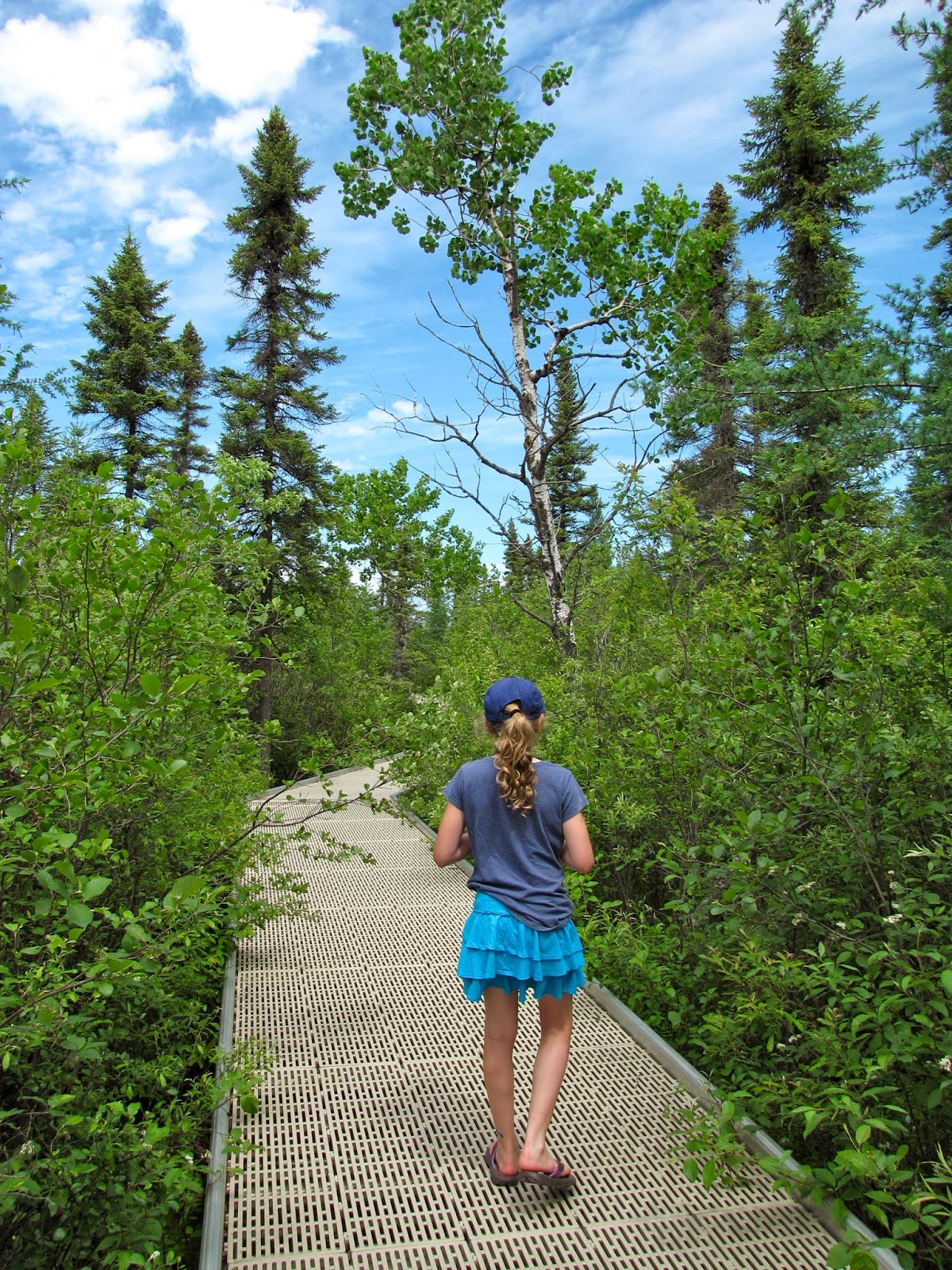
Minnesota's Big Bog boardwalk.
When we arrive at the bog walk parking lot, horseflies swarm the minivan and hurry us past a pond where wild roses sweeten the breeze and clusters of white-striped admiral butterflies flit across the gravel path. Then we duck into a thick arch of foliage where the aluminum boardwalk begins.

It feels cool and dense, reminding us of mangrove walks in Florida before opening into thick stands of bog birch, dogwood and willow before thinning to resilient spruce with snug little cones and tamarack with clusters of bristle-brush needles. The drone of flies quiets the further we walk.

Bog laurel in bloom
Along the way, blueberry shrubs and cranberries intertwine with bog laurel and fuzzy-topped cotton grasses sway and cluster together like white shrink-rayed versions of Dr. Seuss’s truffula trees. We finally reach the interpretive panels and first signs of carnivorous plants, which adapted to eating insects for nutrients other plants get from soil.

A thick-petaled maroon flower nods above the pitcher plants with cupped leaves that discreetly emerge from mounds of moss with vivid greens and streaks of red and yellow. Cupped leaves shimmer with rainwater that traps flies and other bugs drawn to its musty scent and thwarted by tiny hairs on the leaves.


We fail to find the wild orchids or carnivorous sundew plants on our own, but the pretty lavender rose pogonia orchids should be in bloom through International Bog Day July 26 when naturalists will help visitors spot the bog’s hidden treasures. 

Minnesota Big Bog  cotton grasses bob in the wind.
John Devins, a Waconia resident and longtime Red Lake visitor, knows those gifts of the bog continually change. His family has owned a local cabin since the 1950s, and his mom, Patty, in particular is an admirer of the Big Bog and how it changes with seasons, including fall when the tamarack turn to bright gold against sharp blue skies.

“It’s probably one of the best-kept secrets in northern Minnesota,” he says.

Click here to read the full feature in the Star Tribune Outdoors Weekend section and get information on International Bog Day activities.


Chủ Nhật, 25 tháng 5, 2014

Minnesota wildflowers at Nerstrand Big Woods State Park


Marsh marigolds brighten Hidden Falls at Nerstrand Big Woods State Park by Northfield.

Discover Southern Minnesota's wildflowers

Wildflowers flank the trails at Nerstrand Big Woods State Park.
Story and Photos by Lisa Meyers McClintick

The trill of a red-winged blackbird swaying atop cattails instantly takes me back to growing up on the southern still-rural edge of the Twin Cities. April and May offered a daily scavenger hunt for new clusters and carpets of spring wildflowers.

Bloodroot emerged first, ­poking through the musty leaf litter beneath still-bare oak and basswoods. Muted green leaves curled protectively around bloodroot flower buds like a toddler’s hands cupped in prayer just before petals unfurled as crisply white as sheets on a clothesline.

Spring beauty

Dwarf trout lily
Within a week or two, the hillsides would burst into a carpet of pale lavender and pale pink rue anemone followed by trillium, Jack in the pulpit, violets, spiderwort and a rare patch of wild orchis with its tiny cluster of small white and purple orchids on each stem.

That land where I grew up is long gone, bulldozed and reshaped for suburban sprawl, but there are many places in Southern Minnesota where you can see a spectacular parade of wildflowers. And with this year's record-breaking winter and late arrival of spring, you can see the wildflowers in bloom later than usual.

These photos are from a May 13 visit to Nerstrand-Big Woods State Park, often considered one of the best spots in the state to see woodland wildflowers. The park's 2,884 acres of hardwood forest (remnants of the famed Big Woods biome) sits about 15 minutes south of Northfield tucked into a rolling landscape with ravines and small streams carved by glacial runoff.

Dutchman's breeches
Trout lily
Besides a lovely limestone ledge waterfall (that looks deceptively manmade), it's known for its rare dwarf trout lily (federally listed as endangered) and for carpets of flowers tucked into the woods and along the easy hiking trails.


Birders delight in seeing another species of special concern: the red-headed woodpecker. Keep your eyes peeled, too, for the brilliant colors of rose-breasted grosbeaks, indigo buntings and scarlet tanagers flitting among the maples and basswoods. You can check out a bird identification kit from the main office.


If you want to stay and explore--and soak up the spring birdsongs and peaceful woods--there are 51 campsites available.

Marsh marigolds
Can't get away for a short road trip? This feature I wrote for the Star Tribune Outdoors Weekend section includes The Eloise Butler Wildflower Sanctuary, the oldest public wildflower sanctuary in the country. This century-old garden lies west of downtown Minneapolis within Theodore Wirth city park. Look for ongoing programs and guided walks throughout the spring and summer.


To enjoy the showy blossoms of orchards, check out this blog feature.


Love touring domestic gardens? Check out the best destination gardens in Minnesota.


Love finding hikes to waterfalls? Here are some of the best waterfalls in Minnesota and a quick listen to Nerstrand Big Woods' Hidden Falls. Enjoy!


Thứ Hai, 19 tháng 5, 2014

Spring Apple Blossom drives in Minnesota and Wisconsin


Apple orchards bloom across the hills above the Kickapoo River Valley in Gays Mills, Wisconsin.

Head south on the Great River Road

Photos by Lisa Meyers McClintick
Craving a Minnesota or Wisconsin road trip to celebrate the welcome end to winter? Let spring blossoms inspire your route. 

Some of Minnesota's most stunning views can be found along the 17-mile Apple Blossom Scenic Drive each spring. This byway, tucked above the Mississippi River Valley in southeast Minnesota, celebrates the apples which have thrived along these bluffs for more than 150 years.

Bluffs, like the hillsides along the Minnesota River or St. Croix River, shelter orchards from cold temperatures that sink into the valleys. The bluffs' rich limestone soil also nourishes the fruit and gives the area’s 30-some apple varieties a distinct taste.

Meander by farms, orchards

Catch the drive at County Road 3 a few miles south of Winona. This is one of the most striking stretches of the Great River Road. Look for a maze of islands to the east, along with deep ravines and lush, wooded ridges rising from both sides of the Mississippi.

From the picnic area and overlooks at Great River Bluffs State Park, you can even seen Wisconsin’s Black River delta on the opposite shore. The park’s hiking trails thread through the hardwood forest, thick with maples, basswood, oak and hickory. They flame into full glory by late September and early October. If you want to camp here, reserve these spots early.

Historic farms sprawl across Gays Mills' Orchard Ridge.
Most of Minnesota's Apple Blossom Scenic Drive hugs the ridges above Mississippi River, curving through horse and hobby farms and passing historic red barns. As the byway meanders southeast, it nears the orchards. They’re showered with delicate white blossoms in early May and thick with apples by late summer. 

Take a drive to Gays Mills


Because many of these bluff-top farms and orchards (given the proximity to La Crosse and great views) have become homesites, I actually prefer to head into Wisconsin and drive about 45 minutes south of La Crosse, Wis., along the Great River Road, where you may spot eagles and migrating waterfowl and an Amish buggy or two. 

At Wisconsin State Highway 171, head about 12 miles east to the tiny town of Gays Mills. It welcomes visitors with a burst of showy white blossoms then wows them on the east side as the highway climbs the high ridge above the Kickapoo River Valley where orchards have grown award-winning apples since 1905.

 
An elegant dinner at LaCrosse's The Waterfront Restaurant.
While orchards aren’t open in the spring, wooden signs promise fresh-picked fruits and sweets from apple pizza to pies—a perfect reason for a return trip in the fall.

Loop back to La Crosse

If you head back to La Crosse via Viroqua on Highway 61, the approximately 100-mile loop drive meanders through steep coulees and past brooks squiggling through lush meadows. Viroqua's also an ideal lunch stop with the Driftless Cafe. It serves tasty seasonally inspired meals with local ingredients, such as roasted root vegetables and trout. 

For an elegant finish to the day, enjoy the riverfront views, drinks and date-night meals at The Waterfront Restaurant and Tavern. If the weather's balmy, you can sit on the patio to catch warm spring breezes drifting along the Mississippi River.


Lupine growing along Lake Superior.
Take more scenic spring blossom drives:

Here are my favorite picks for scenic spring blossom drives in Minnesota and Wisconsin:

Bayfield, Wisconsin
You can't beat the gorgeous Lake Superior setting, artsy shops, great cuisine and views of the Apostle Islands. The month-long Bayfield in Bloom festival includes blooming orchards plus 54,000 daffodils. Our favorite Bayfield flower? June-blooming lupine which fills the ditches with an explosion of purple and tinges of pink.

Minnesota Landscape Arboretum, Chaska, Minn.
A great option if you don't have time to travel far from the Twin Cities and want to research planting your own apple or fruit trees. Call the Bloom Line at 612-625-9791 to find out what's blooming.

Door County, Wisconsin.
Another lovely Great Lakes setting and the chance to meander by both cherry and apple orchards. Door County's six-week Festival of Blossoms runs through early June and includes several package deals. It's a great time to visit before summer crowds hit.

--Photos and text by Lisa Meyers McClintick